They’re Waiting
A behavioral accountability system designed to interrupt avoidance loops around emotionally resisted tasks using urgency, timing, and lightweight social pressure.
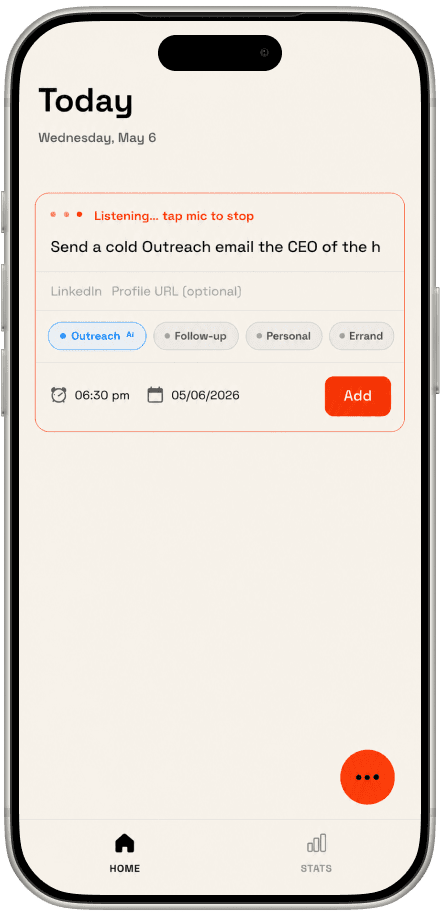
Task overview and behavioral scheduling surface.
Why this matters
Most productivity systems optimize for organization, not avoidance. Users often know exactly what they need to do, but still delay emotionally resisted tasks because the friction is psychological, not informational.
They’re Waiting explored whether timing, interruption mechanics, and lightweight accountability pressure could reduce procrastination without relying on shame-based productivity patterns.
The Problem
The product was built around the intent-versus-action gap: users repeatedly saw the same high-stakes tasks but still avoided them at the exact moment a decision had to be made.
- Emotionally resisted tasks stayed visible in task lists for days while lower-friction work got completed first.
- Traditional reminders became background noise after repeated dismissals and stopped influencing behavior.
- Avoidance intensified near difficult actions such as outreach, follow-ups, and uncomfortable conversations.
- Most task apps captured plans well but failed at the exact moment action was postponed.
Core Insight
Productivity failure is often not a planning problem — it is an avoidance problem. The hardest tasks are usually emotionally resisted tasks: outreach, difficult conversations, follow-ups, or actions tied to rejection, uncertainty, or social discomfort. The product focused on interrupting avoidance at the moment action is delayed, not simply organizing tasks earlier.
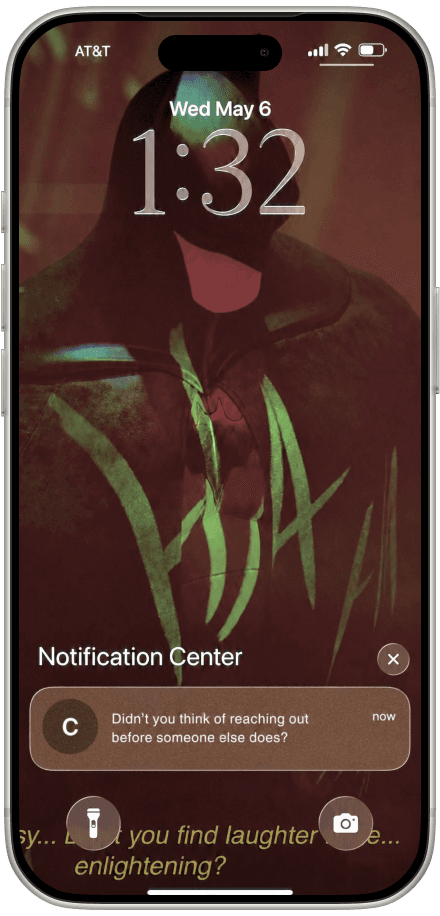
Time-aware interruption designed to surface emotionally resisted tasks
before avoidance escalates.
Design Approach
- 1.
Anchor tasks to real-time interruption windows instead of passive reminders.
Why it mattered: Triggering prompts in narrow, context-aware windows created urgency at the point of likely delay rather than adding another item to a backlog.
- 2.
Use swipe, snooze, and completion mechanics to force lightweight behavioral acknowledgment.
Why it mattered: Each interruption required a small action: complete now, snooze intentionally, or swipe to acknowledge. This reduced passive dismissal and made avoidance patterns visible.
- 3.
Treat notification tone and cadence as part of the product system, not decorative copywriting.
Why it mattered: Escalation language, reminder spacing, and pressure limits directly affected trust and re-engagement, so messaging behavior was designed as core interaction logic.
Behavioral Accountability System
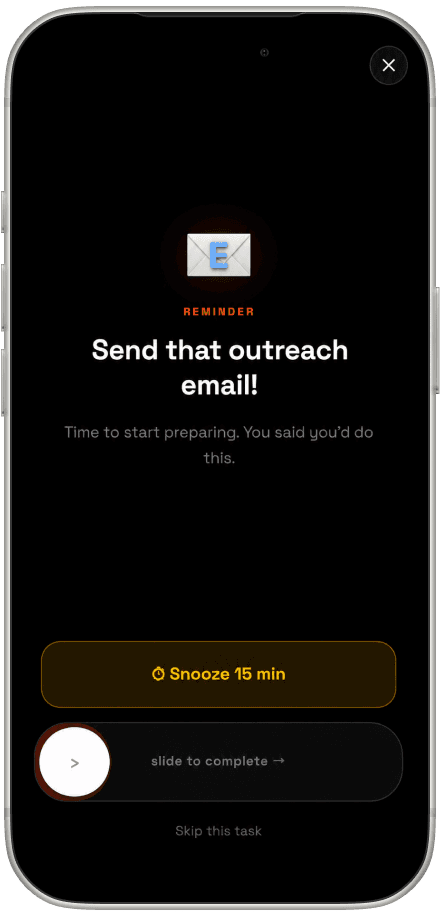
High-friction completion flow using swipe acknowledgment
and intentional snooze actions.
Impact
- Validated an interruption model where swipe-to-complete and intentional snooze actions reduced passive reminder dismissal.
- Made behavioral response patterns measurable through completion visibility, snooze frequency, and repeated deferral tracking.
- Showed that accountability-style notification cadence can increase action on resisted tasks when escalation stays bounded and non-shaming.
- Established an interaction baseline for task parsing, categorization, and timing pressure that can be tested against real schedules.
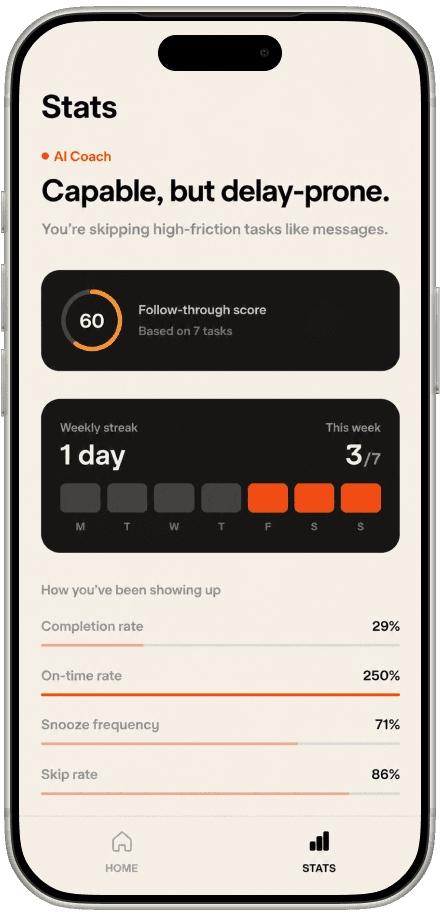
Behavioral tracking focused on follow-through patterns,
deferral frequency, and interruption response.
Reflection
Current limitation:
The hardest challenge was balancing accountability pressure without making the product feel manipulative or emotionally exhausting over time.
Next iteration focus:
Validate interruption tolerance, escalation timing, and long-term notification fatigue using real user schedules and repeated task patterns.