Wardrobe
Everything the user already owns.
An AI styling assistant that turns wardrobe, weather, calendar, and preference signals into daily outfit decisions users can trust.
 6-person team
 43 beta users
Most styling products treat fashion as an inspiration problem. They generate endless outfit ideas, yet rarely answer the one question people have before leaving home: "What should I wear today?"
Duorin takes a different approach, combining wardrobe, weather, calendar, preferences, and styling intelligence into one daily decision instead of more inspiration.
A useful AI stylist needs more than image generation. It has to understand the user's wardrobe, personal style, daily context, and the situations they dress for. Duorin was built on one principle: better context creates better decisions.
Context matters more than more recommendations.
Before making a recommendation, Duorin combines multiple signals about the user and their day.
Wardrobe
Everything the user already owns.
Weather
What is appropriate today.
Calendar*
Where the user is going.
Preferences
Personal taste and style.
Body Signals
Fit, silhouette and undertones.
Styling Knowledge
Fashion rules, garment compatibility and colour theory.
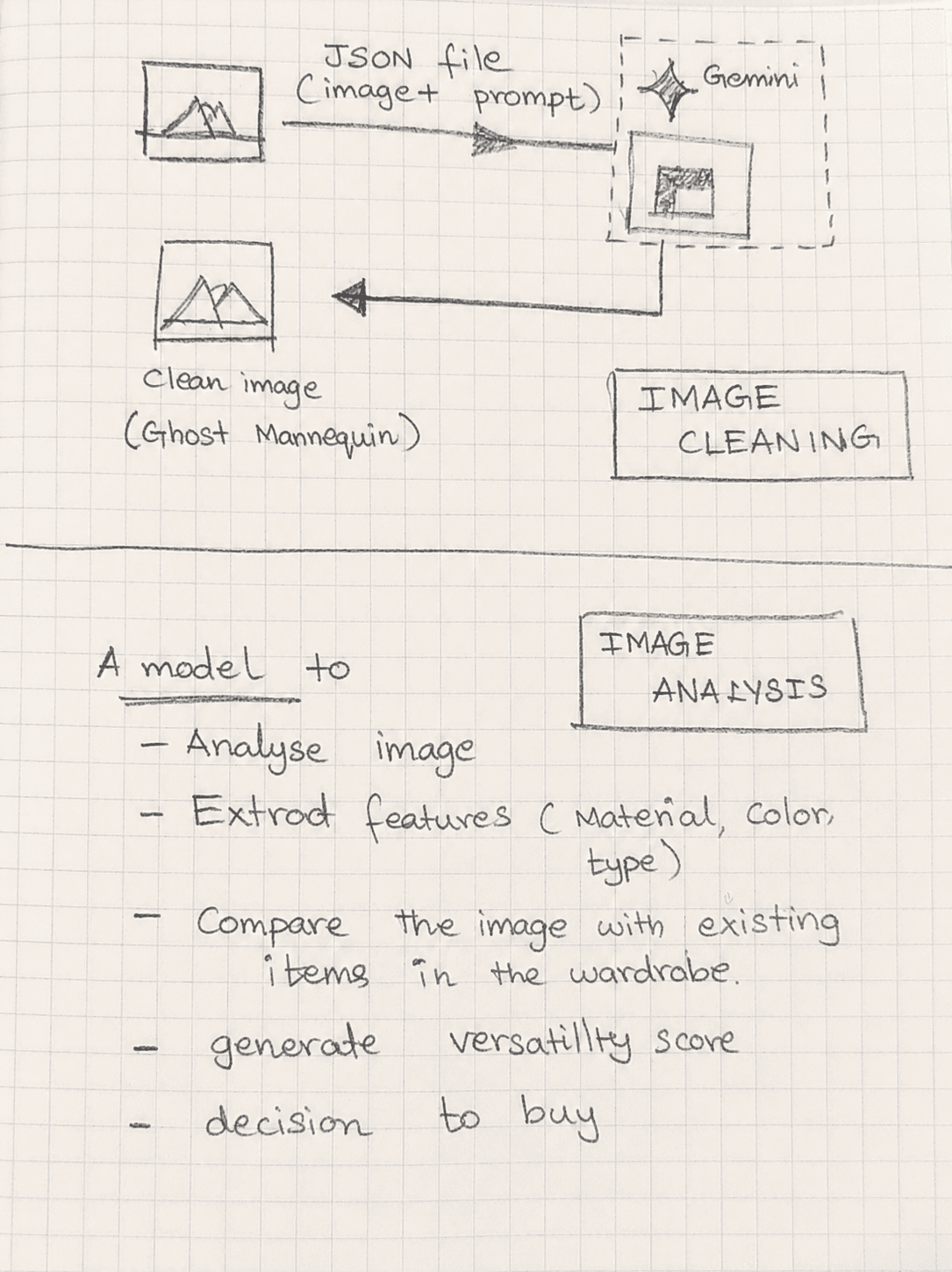
Before Duorin could reason about weather, calendar, or taste, it needed a clear picture of what the user already owned. That meant turning messy fashion images into structured garment data the system could work with.
1
User uploads or saves a fashion image.
2
The system cleans the image and separates the clothing item from the original photo.
3
The item is analyzed for type, color, material, pattern, sleeve, neckline, and fit.
4
The structured item becomes usable for matching, gap detection, and outfit generation.
Before
After
From evaluating individual garments to recommending complete, context-aware outfits.
Three moments define the final experience.
Transforms raw fashion images into wardrobe-ready data.
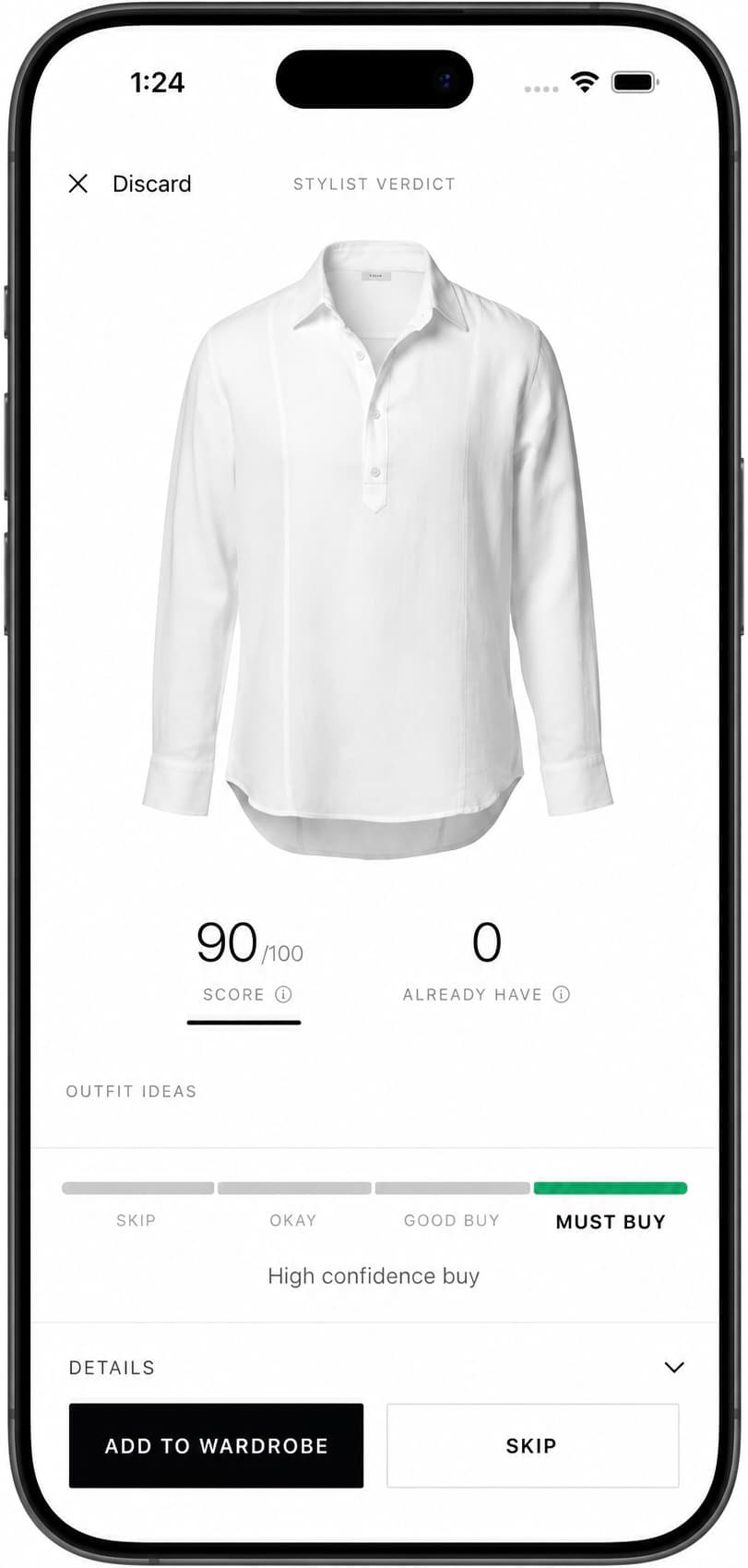
Evaluates garments before they enter the wardrobe.
Generates a few context-aware outfits for the day.
Duorin uses calendar context to improve outfit recommendations without relying on raw personal data.
Calendar events are interpreted on-device into simple context signals such as occasion, timing, and formality. Only those signals are used to personalize recommendations, keeping personal event details private.
This keeps recommendations personal without exposing users' calendar information.
The biggest lesson was not how to improve recommendations.
It was that users trusted explainable decisions more than perfect predictions.
That changed how I think about AI products: the hard part is not generating outputs. It is helping users trust them enough to act.